Where Can Solar Farm Construction Costs Be Optimized?
- Share
- Issue Time
- Nov 19,2026
Summary
Utility-scale solar farm costs are decided long after bidding. This guide shows where construction costs can really be optimized - from DC collection architecture and cable routing to material selection - and how SUNKEAN's prefabricated Trunk System and PV Wiring Harness cut on-site labor while improving reliability.
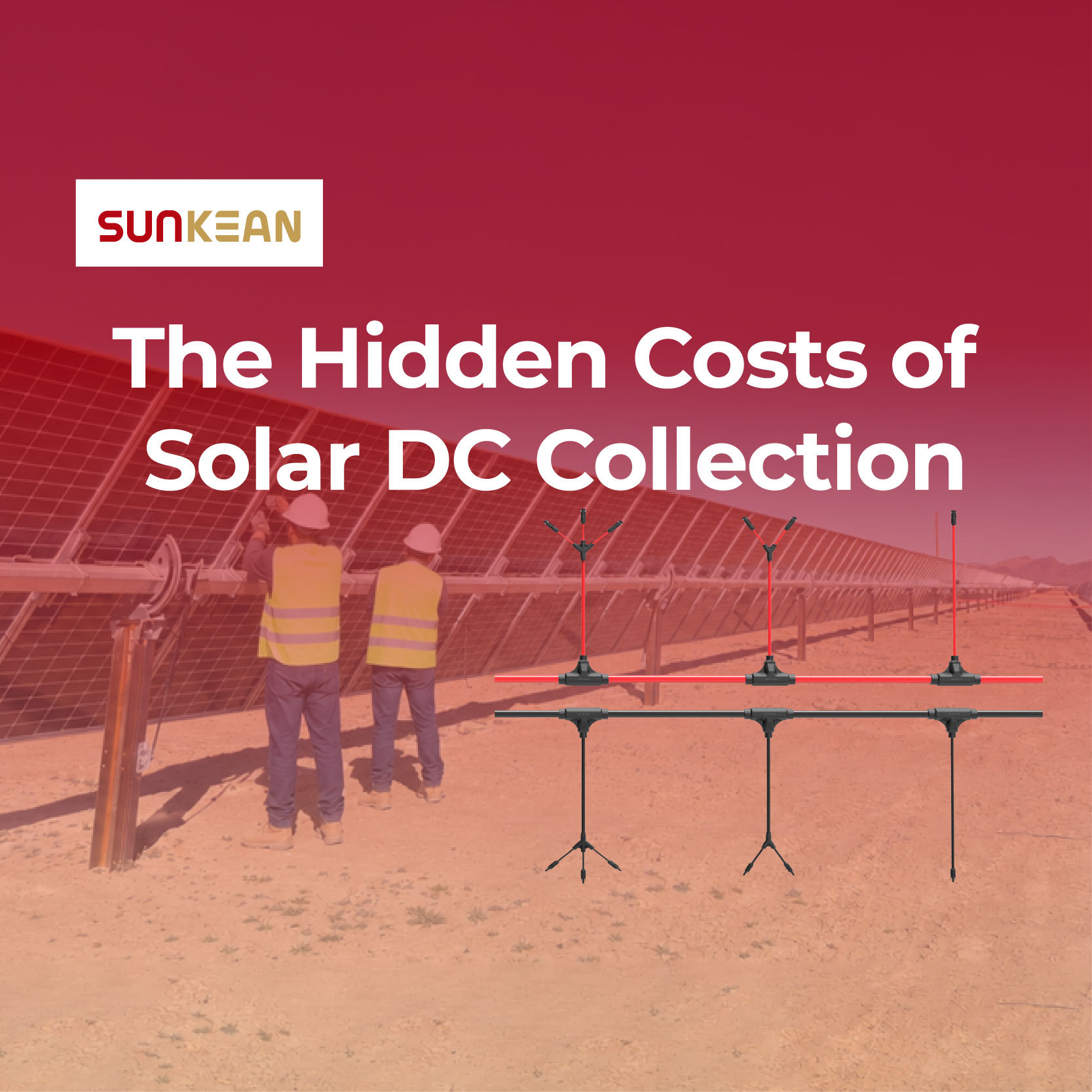
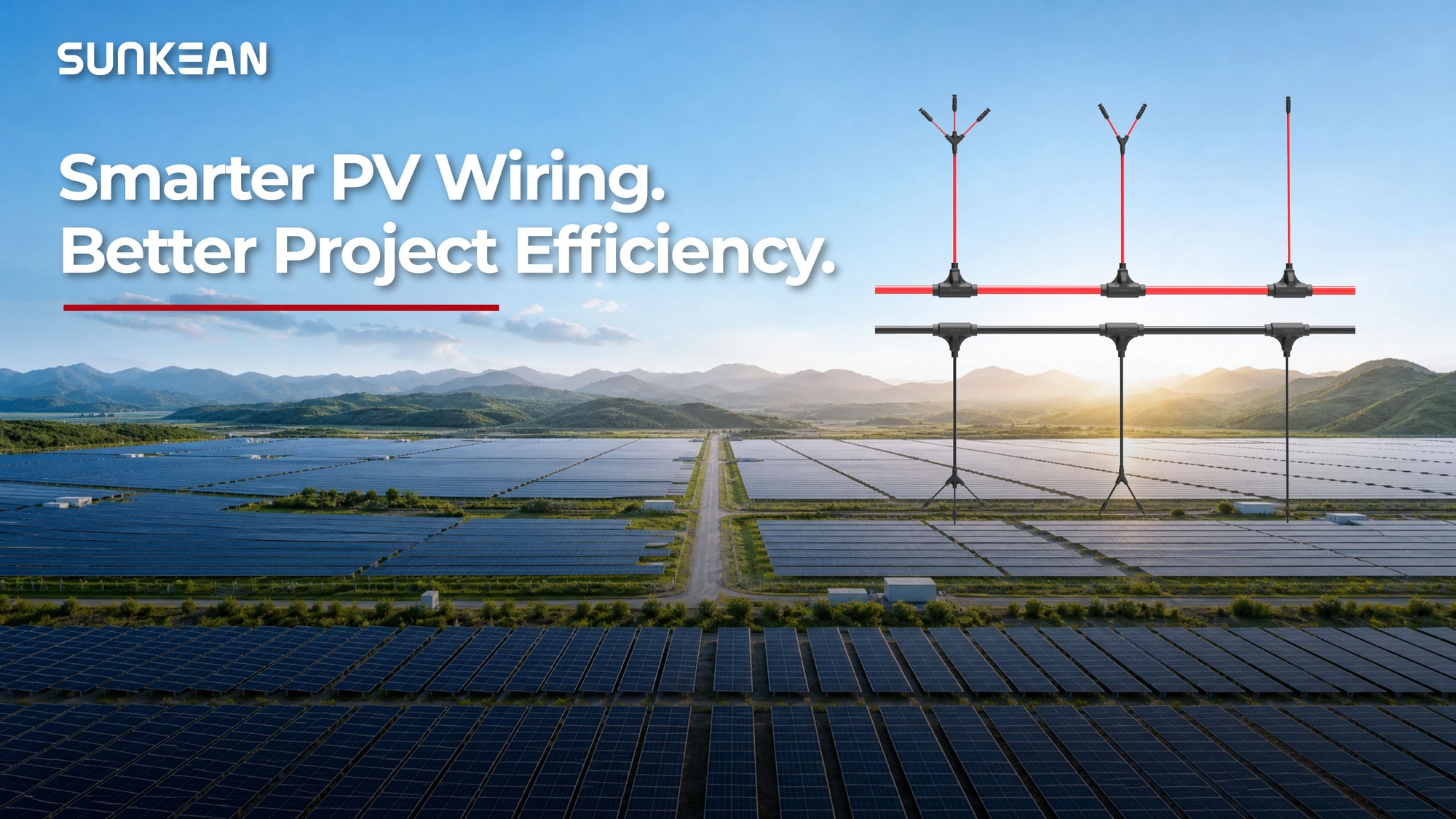
Rethinking the Hidden Costs of DC Collection Systems in Utility-Scale Solar Projects
The cost estimates established during the bidding stage are often put to the test once a project moves into construction. For EPC contractors, effective cost control depends not only on the bid price but also on the actual costs incurred during execution. Cable routing, on-site connections, trench excavation, and construction management may seem like separate expenses, but their costs can accumulate as the project progresses, adding to overall construction costs.
This is particularly relevant to utility-scale solar projects, where DC collection circuits span long distances, involve numerous connection points, and cover widely distributed installation areas. Construction planning and on-site execution directly affect overall project costs. When cost control focuses solely on the purchase prices of cables and connectors, the hidden costs associated with building the entire DC collection system can easily be overlooked.
EPC contractors therefore need to take a more comprehensive approach, optimizing system design and construction methods while coordinating material selection, cable routing, and on-site operations to identify further cost-saving opportunities.
Does Lower Cable Cost Really Mean Lower Project Cost?
When cost optimization focuses on individual materials or components, the potential savings are often limited. A lower cable purchase price does not necessarily translate into lower overall project costs. Likewise, a less expensive component does not automatically offer greater cost efficiency throughout the construction process.
For EPC contractors, a more important consideration is the overall design of the DC collection system. This includes whether the system architecture is appropriate for the project scale and site layout, whether cable configurations and routing methods are well planned, and whether material selections balance procurement costs, installation requirements, and long-term operational needs.
Cost optimization for DC collection systems should therefore take into account the project design, site conditions, construction organization, and material configuration as a whole. By evaluating every stage, from system architecture and product selection to cable routing and future maintenance, project stakeholders can identify further opportunities to reduce overall project costs.
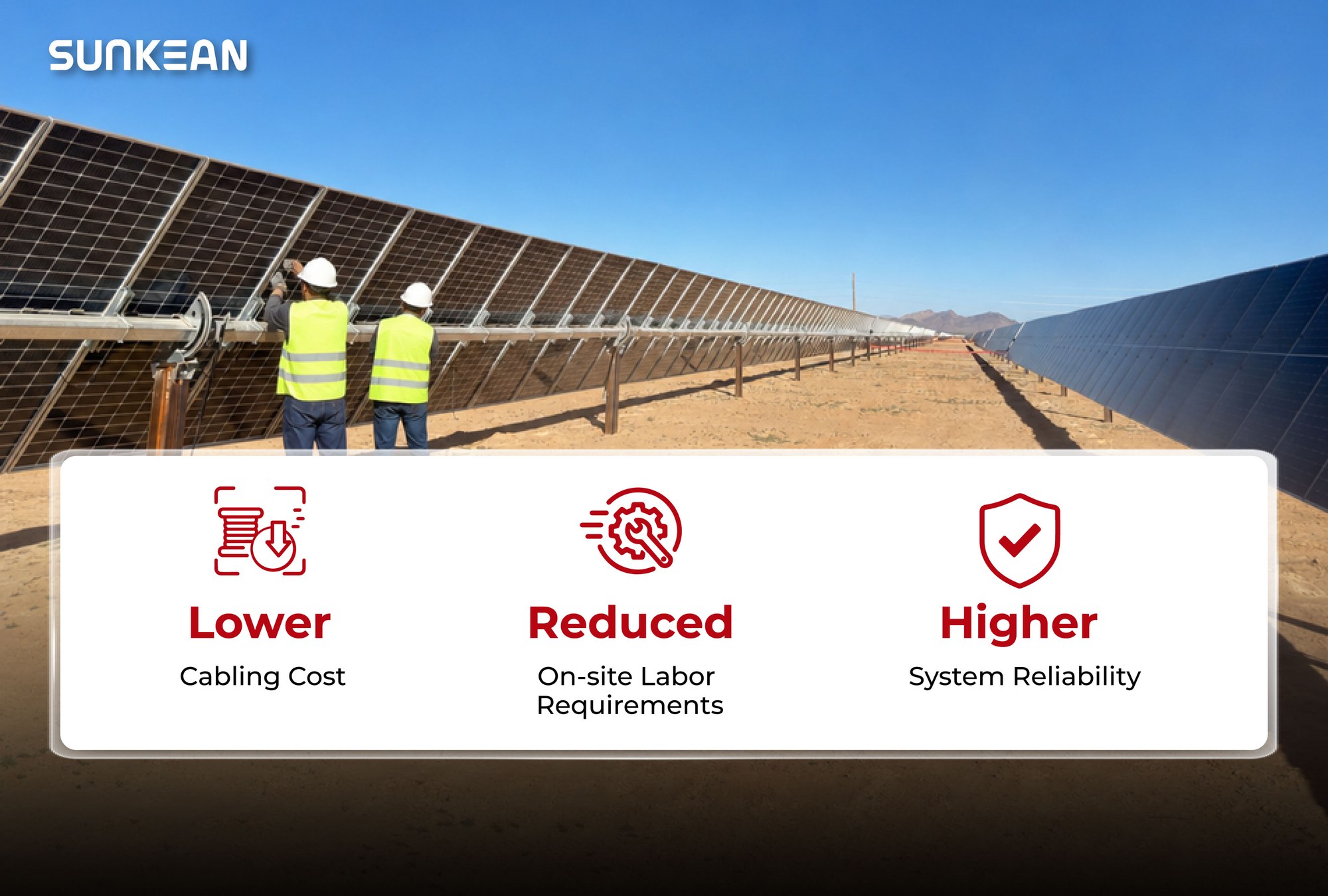
Prefabricated Collection Solutions: Streamlining Installation and Cable Routing
To address different levels of DC-side connection requirements in utility-scale solar projects, SUNKEAN provides two complementary solutions: Trunk System and PV Wiring Harness. Designed respectively for DC mainline collection and PV string connections, both solutions use prefabricated configurations to optimize connection architecture and reduce on-site processing and installation work.
2000 VDC TRUNK-T™: Simplifying DC Collection and Field Installation
At RE+ 2026, SUNKEAN launched its new 2000 VDC TRUNK-T™, which has achieved ETL certification.
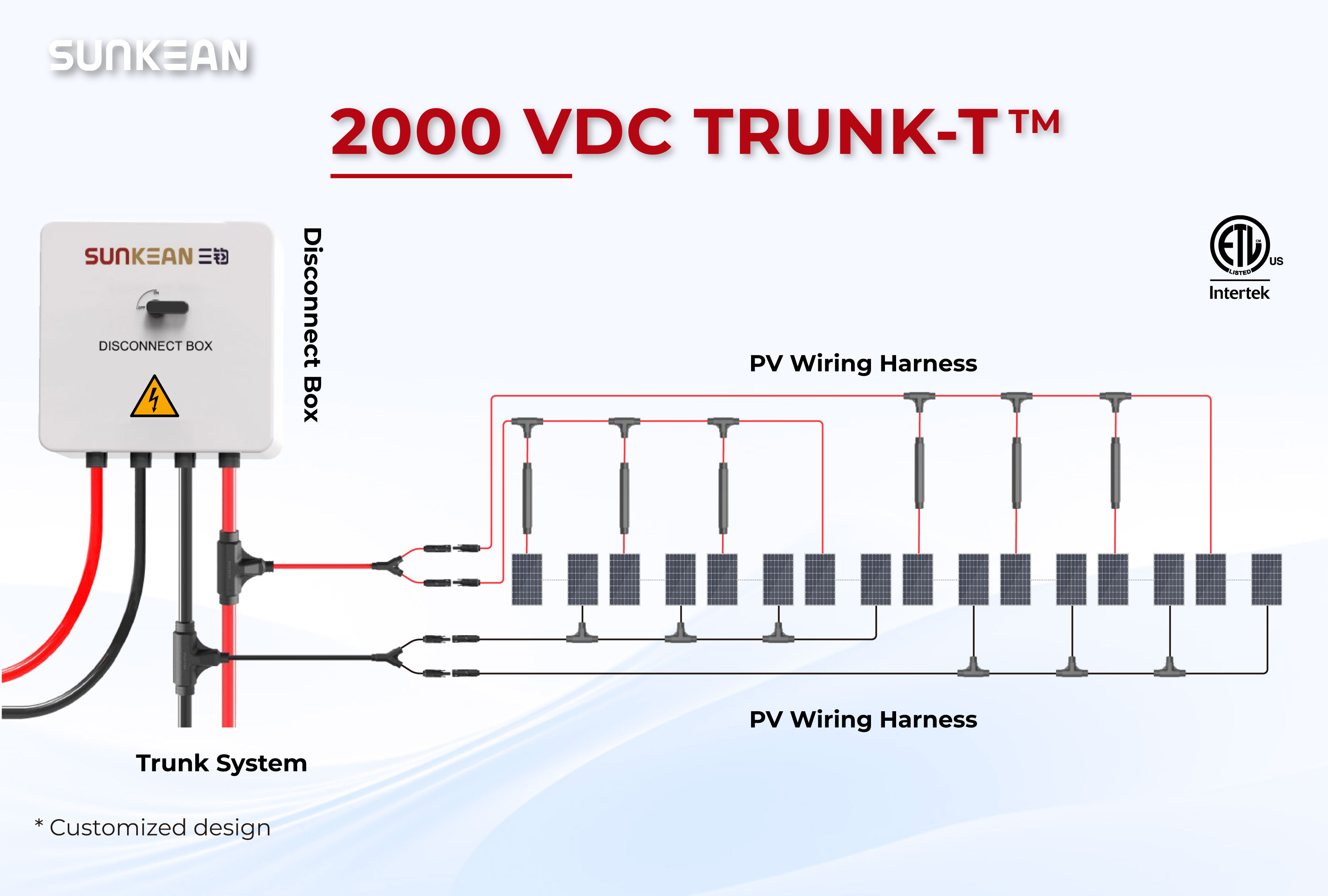
Designed for large ground-mounted solar plants, the system integrates trunk cables and branch connections into a single assembly that collects DC power from PV strings and delivers it to a disconnect box. The TRUNK-T™ features innovative vertical cable exits, helping installers follow the planned collection layout. Its staged current-collection design combines incoming branch currents before feeding the combined current into the trunk cable to reduce the risk of excessive localized temperature rise.
Its factory-prefabricated trunk assembly consolidates multiple DC outputs, helping reduce on-site cable preparation and connection work.
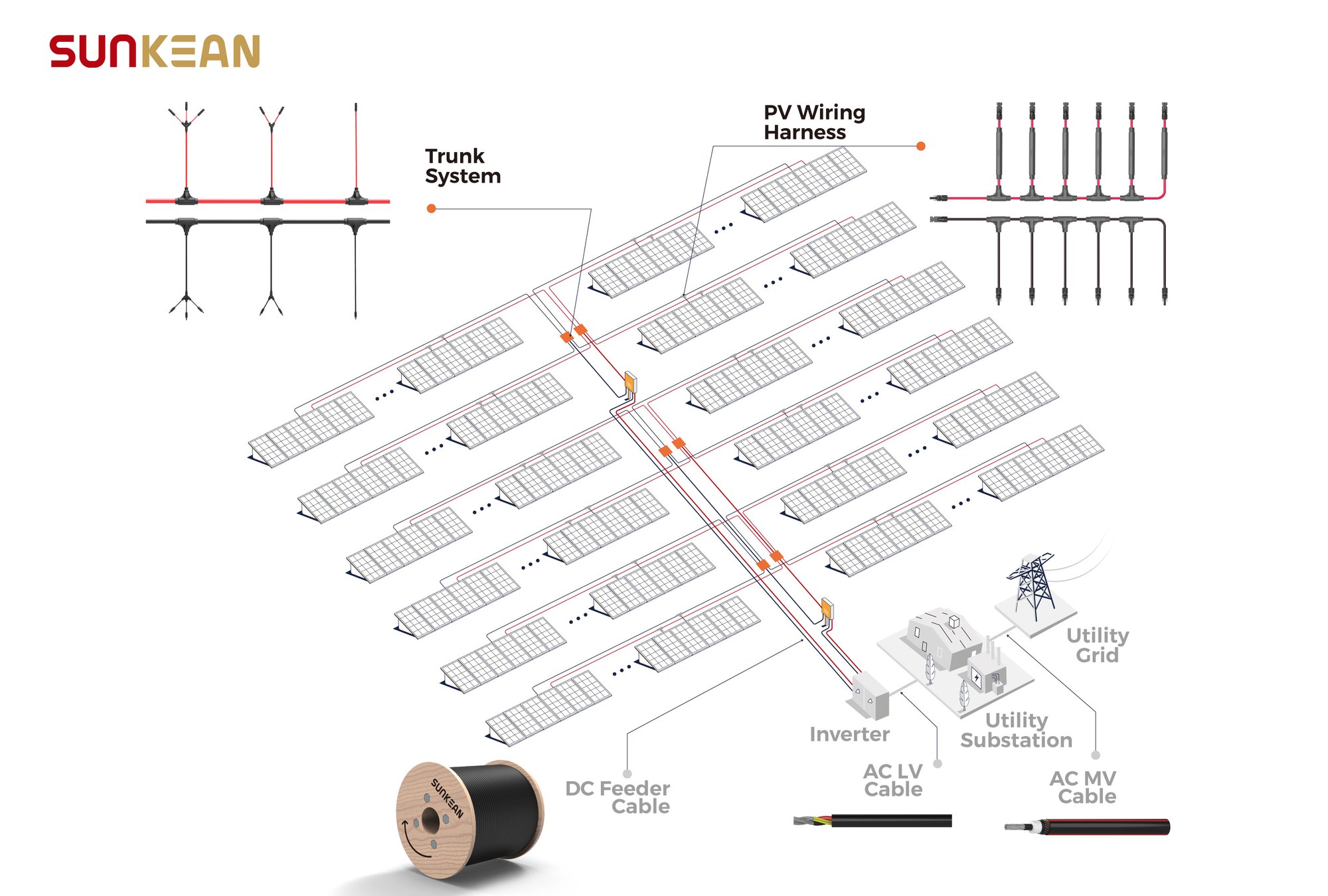
SUNKEAN also offers copper-to-aluminum and all-aluminum options, giving customers greater flexibility to select conductors in line with the project’s electrical design and material requirements.
PV Wiring Harness: Streamlining PV String Connections and Integration
Utility-scale solar farms contain large numbers of PV strings, which require cables and connectors to establish interconnections between modules and provide string outputs. As the number of modules and the size of solar arrays increase, on-site connection work becomes more complex, placing greater demands on installation efficiency and connection consistency.
SUNKEAN's PV Wiring Harness Connection Solution is engineered according to project-specific designs, where cable processing, branch configurations, and connector assembly are completed in advance at the factory. The harness can be customized to accommodate module layouts, cable lengths, and connection requirements.
By moving suitable standardized operations upstream into the manufacturing process, this solution helps reduce repetitive on-site processing and wiring, simplify PV string connection procedures, and improve consistency across connection configurations.
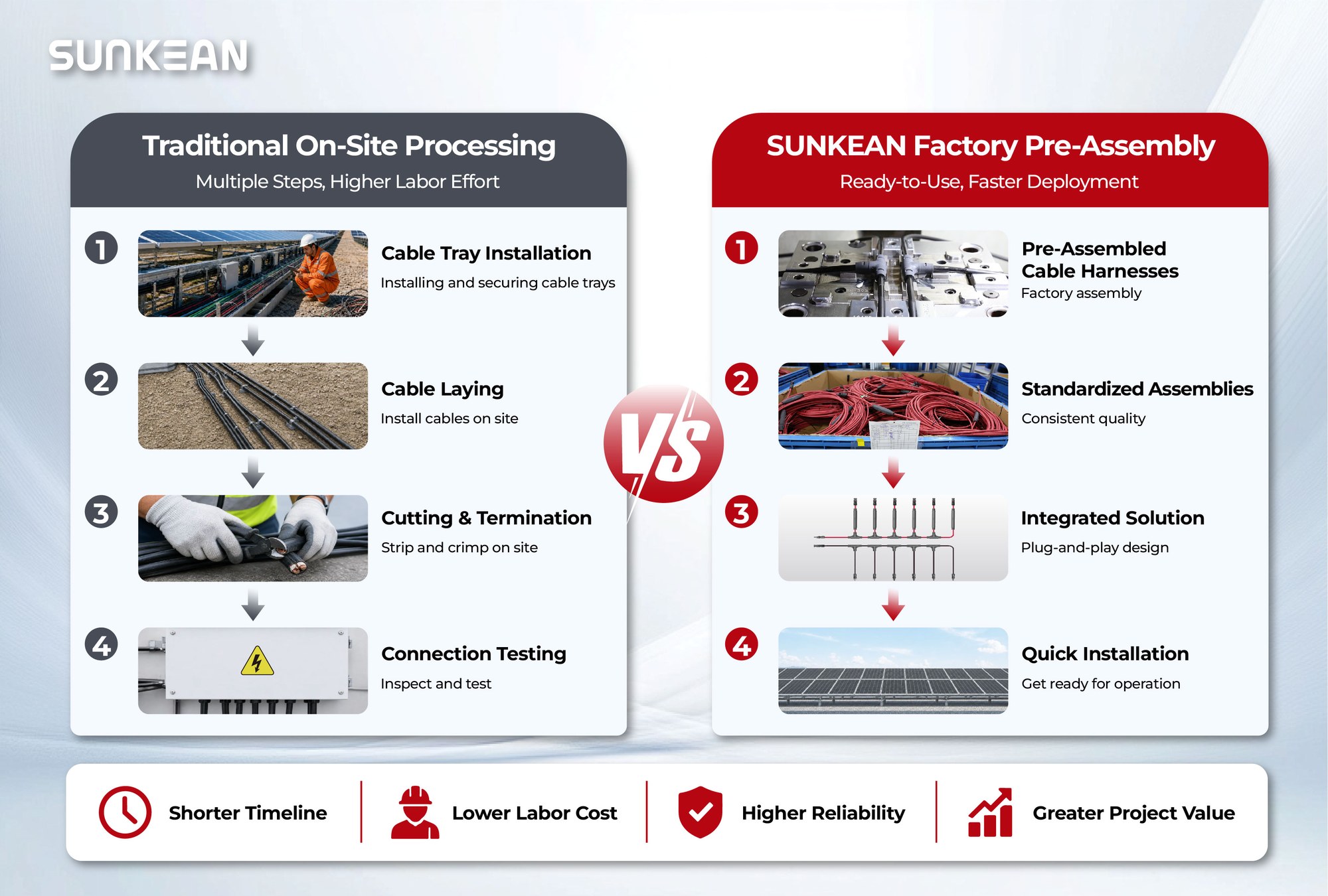
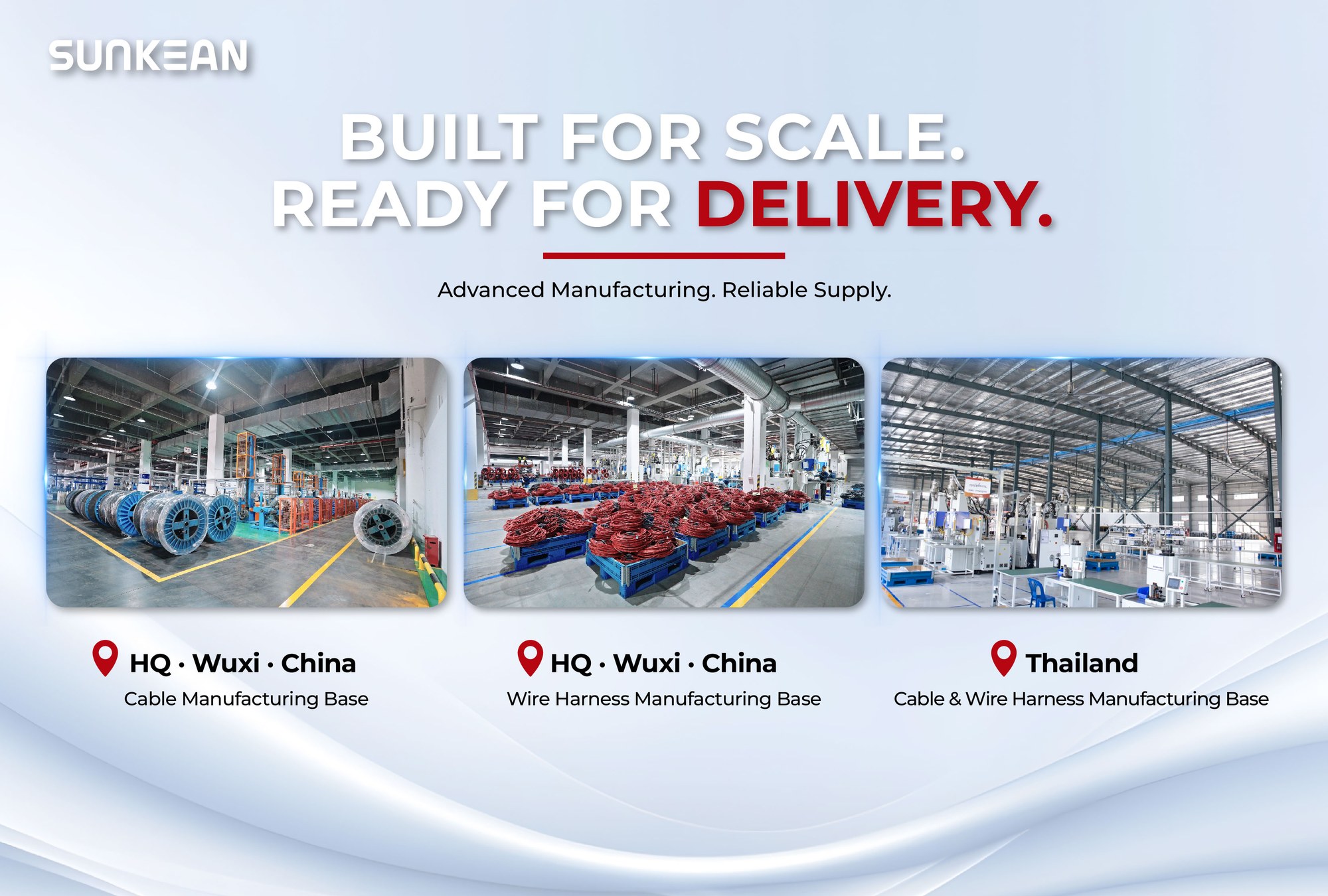
The successful implementation of a collection solution depends not only on system design but also on manufacturing capabilities and quality assurance that match the project's scale. SUNKEAN continues to strengthen its manufacturing capabilities across PV cables, connectors, wiring harnesses, and collection systems. From raw material selection and production processing to finished-product testing, comprehensive quality control supports standardized manufacturing and reliable project delivery for both PV Wiring Harness and Trunk System solutions.
Better-Engineered Collection Solutions. Greater Cost-Saving Potential.
For EPC contractors, the primary objective of DC collection system optimization is to control material consumption, construction costs, and project timelines while meeting design requirements and ensuring operational reliability. For IPPs and project owners, the evaluation must also account for both initial investment and long-term operational value.
When planning a DC collection solution for a solar power plant, stakeholders should look beyond the purchase prices of cables and connectors and consider the following factors:
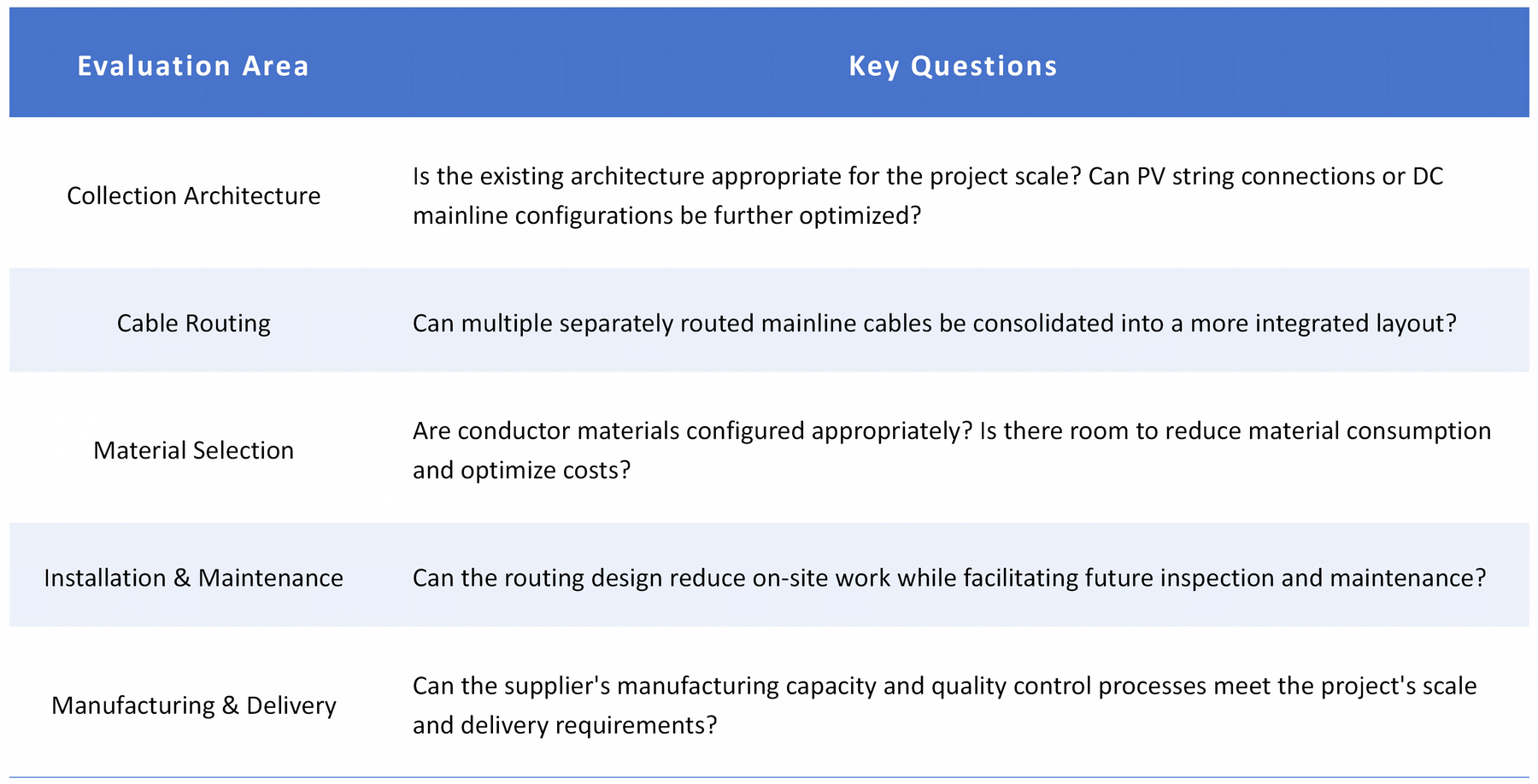
Different site conditions, system designs, and construction methods call for different optimization strategies. Rather than simply comparing the purchase prices of cables and connectors, it is more important to assess the overall cost efficiency of a solution based on the construction and operational requirements of the entire DC collection system.
Through its PV Wiring Harness, Trunk System, and complementary copper-to-aluminum connection technologies, SUNKEAN works to optimize connection architecture, material configurations, and installation methods. These solutions help EPC contractors, IPPs, and project developers reduce material consumption and construction costs where applicable, while ensuring that the DC collection design is aligned with the specific requirements of each project.